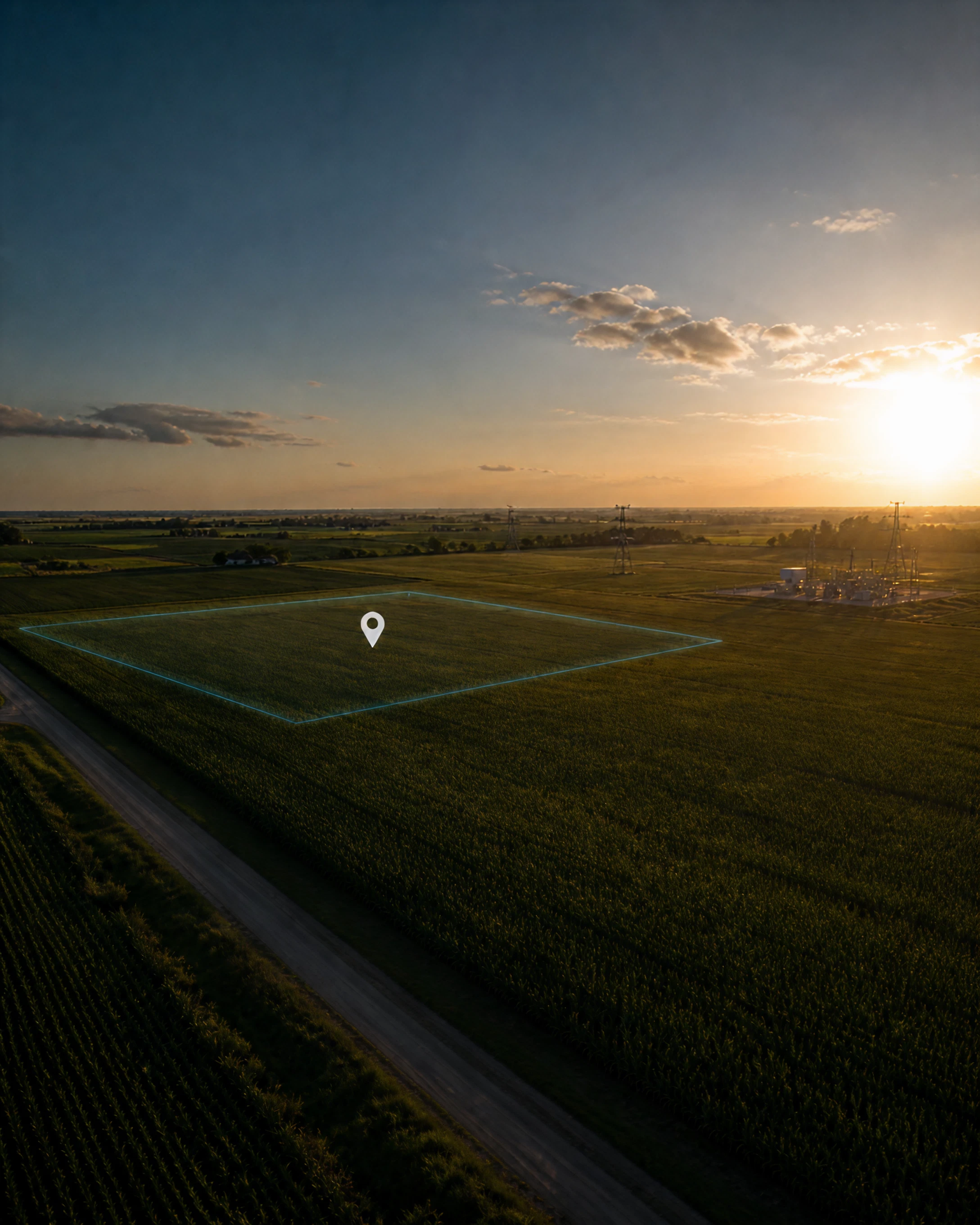
Backed by Illinois energy legislation

10+ yrs in IL energy100s of projects$0 cost to you

Your land could earn

$16,000/yr

with a 2 MW battery project · only ~0.2 acres needed

2 MW
2 MW20 MW
Select your county
10+
years developing energy projects in Illinois
100s
of active energy projects nationwide
$0
cost to the landowner

Why battery storage, why now

A decade of manufacturing scale has transformed battery economics. What was once experimental is now one of the fastest-growing infrastructure investments in the country.

90%

decline in lithium-ion battery costs since 2010

Source: BloombergNEF

89 GW

of battery storage in the US interconnection queue

Source: Lawrence Berkeley National Lab

CEJA

Illinois legislation created new incentives making battery projects viable statewide

Climate and Equitable Jobs Act, 2021

How it works

Battery energy storage systems charge overnight when electricity is cheap and discharge during the day when demand is highest. Our development partner — one of the nation's leading clean energy companies — has been building solar projects across Illinois for over a decade and is now expanding into battery storage.

Small footprint

A typical battery installation uses as little as 1 acre, depending on the project size. It's roughly the size of a few shipping containers on a concrete pad, surrounded by a fence. The rest of your property stays exactly as it is.

Steady lease payments

You sign a long-term lease — typically 20 to 25 years — and receive annual payments. Rates escalate over time. Our development partner handles everything: permitting, construction, maintenance, and insurance.

No cost to you

The developer covers all costs because the project revenue pays for itself. You're leasing the land, similar to leasing farmland to a tenant — but at a significantly higher rate per acre.

Battery energy storage containers on an Illinois farm

A typical installation on active farmland

What the process looks like

1

Tell us about your property

Fill out a short form with your property location and acreage. Takes about two minutes.

2

We check your site

We look at your property's proximity to power lines, substations, and interconnection capacity. Not every site qualifies — it depends on the local grid infrastructure.

3

Review a lease offer

If your property is a fit, we'll present lease terms with annual payment amounts, lease duration, and escalation schedule. You can review it with your family, your attorney, or your farm advisor. There's no pressure and no obligation.

4

Lease begins

Once you sign, the energy company handles permitting and construction. You start receiving payments. If you have questions at any point, you have a direct contact.

Aerial view of a battery energy storage facility with fencing on agricultural land

A battery storage facility on agricultural land — fenced, contained, minimal footprint

Battery storage installation with native landscaping and transmission tower

Installations can be landscaped with native plantings, blending into the rural landscape

Common questions

Will this affect my farming operations?

No. The installation is contained to a small fenced area — typically 1 to 5 acres depending on project size. It doesn't interfere with planting, harvesting, drainage, or equipment access on the rest of your land. Farmers who have signed leases report no impact on their day-to-day operations.

How much land do I need?

As little as 1 acre, though larger projects may use up to 5 acres. The key factor isn't how much land you have — it's your property's proximity to three-phase power lines and substation infrastructure. Some properties with hundreds of acres don't qualify, while a small parcel in the right location does.

How much can I expect to earn?

Lease payments vary depending on your location, acreage, and proximity to power infrastructure. Generally, battery storage leases pay significantly more per acre than farmland cash rent. Use our lease calculator for a county-specific estimate.

Who pays for installation and maintenance?

The developer pays for everything — site preparation, equipment, electrical work, permitting, ongoing maintenance, and insurance. Our development partner has built hundreds of energy projects and has the financing and infrastructure to handle the full project lifecycle. Your only role is leasing the land.

What happens when the lease ends?

At the end of the lease term, you can choose to renew under new terms, or the energy company removes the equipment and restores the site. The removal obligation is written into the lease.

Can I cancel the lease?

Leases are long-term commitments, similar to farmland leases or wind turbine easements. The specific terms, including any early termination provisions, are spelled out in the lease agreement, which you should review with an attorney before signing.

Is this a government program?

Not directly. Illinois passed legislation that created new incentives for battery energy storage, which made these projects economically viable across the state. The leases are between you and a private energy developer — not the government. Our development partner is one of the nation's leading clean energy companies, with over a decade of experience building solar projects in Illinois.

Who is behind this?

We partner with one of the largest community solar and energy storage developers in the United States. They have hundreds of active energy projects, including many across Illinois. They've been developing clean energy projects in the state for over 10 years. When your contract is signed, you'll work directly with their team.

Have you done this in my area before?

Our development partner has active solar projects across northern Illinois, including in many of the same counties where battery storage is now viable. Battery storage is newer, but the company, the process, and the team are well established.

Is battery storage safe? What about fire risk?

You may have heard about the Vistra Moss Landing fire in California — that incident involved older NMC (nickel manganese cobalt) chemistry batteries, which are more prone to thermal runaway. Modern projects in Illinois use LFP (lithium iron phosphate) chemistry, which is far more thermally stable and contains no toxic heavy metals. All installations comply with NFPA 855 standards, which require fire suppression systems, setbacks, emergency response plans filed with local fire departments, and 24/7 monitoring. For context, grain bin explosions, anhydrous ammonia incidents, and diesel storage leaks cause far more injuries and damage annually than battery storage, which has fewer than 10 significant events globally per year across thousands of installations. Read our full safety guide at illinoisbattery.com/blog/is-battery-storage-safe-illinois.

Will battery storage affect nearby property values?

Battery storage installations are small — typically 0.2 to 2 acres, about the size of a few shipping containers on a concrete pad behind a fence. They're 8-10 feet tall, visually minimal, and often screened by existing tree lines. There is no peer-reviewed evidence of property value decline from small BESS installations. The factors that drive property value concerns for large solar farms or wind turbines — massive visual footprint, noise audible from a distance, shadow flicker — don't apply. The installation is fully removed and the site restored when the lease ends.

Find out if your property qualifies

Answer a few questions and we'll let you know. No obligation.

Get Started